See prices From 79.6 EUR · Free cancellation available
Contents
Is Lake Como safe? Yes, by any reasonable measure, with petty theft, inflated taxi fares and the occasional ticket tout as the real risks rather than anything violent or dangerous. Here’s what I’d actually tell a friend before their first trip: the lake itself is no riskier than any other popular Italian tourist town, but a few specific scams catch first-timers often enough that they’re worth knowing in advance.
This guide covers the common scams, swimming safety, and how comfortable solo and family travelers tend to feel here, before routing you into the rest of the planning picture. For the wider view of geography, timing and transport, the complete Lake Como planning guide is worth reading first if you haven’t settled on a base town yet.
Is Lake Como Actually Safe for Tourists?
Yes. Violent crime against tourists is rare on Lake Como, and the towns most visitors spend time in, Como, Bellagio, Varenna and Menaggio, are walkable, well-lit and heavily used to foreign visitors year round. The real risks here are financial rather than physical: overpriced taxis, pushy ticket sellers near the ferry docks, and the usual pickpocket risk that comes with any crowded tourist spot in Italy.
I’d put Lake Como on the same safety tier as most well-visited parts of northern Italy rather than treating it as a special case either way. The mistake I see most often is visitors relaxing their guard specifically because the setting feels so calm and scenic, which is exactly when a wallet left open in a side pocket becomes someone else’s opportunity.
Check prices & dates
Ready to visit?
Book your tickets in advance: popular time slots sell out.
The three that come up again and again are taxi drivers quoting inflated fares to tourists who don’t know the going rate, unofficial “guides” or ticket sellers hovering near ferry docks and popular attractions, and the occasional overpriced menu that only gets handed to visitors who look like they’re not checking. None of these are unique to Lake Como, but the lake’s heavy day-trip crowds give them more opportunities than a quieter town would.
My honest take is that lake como scams are almost entirely avoidable with two habits: agree a price before you get in anything, and buy tickets only from a marked official counter or a verified online booking. I’d rather spend thirty extra seconds confirming a price than discover the gap on my card statement later.
How Do Taxi Overcharging Scams Work at Lake Como?
Taxi overcharging usually works by quoting a flat, inflated price to a visitor who doesn’t know the normal fare for that route, rather than running the meter or any official rate card. It happens most at train stations and in the busiest towns during peak season, when a driver knows a tired traveler is unlikely to negotiate hard.
I’d agree a price out loud before the door closes, every single time, and treat any driver who refuses to state a number upfront as a hard pass. If a fare feels obviously high for the distance, asking your hotel or a shop for a rough expected price beforehand is a five-minute habit that saves real money.
Are Ticket Touts at the Ferry Docks a Real Risk on Lake Como?
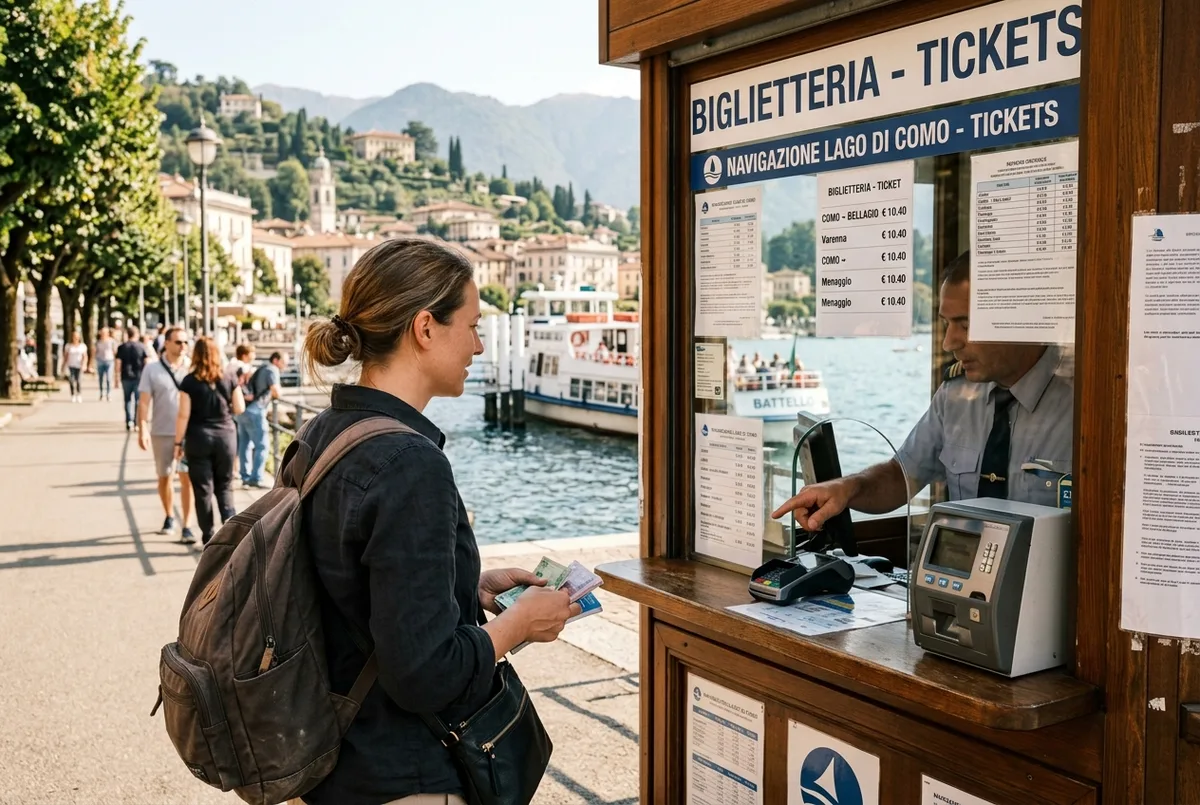
Yes, in the busiest towns during peak season, where people posing as helpful guides sometimes sell tickets at a markup or direct travelers toward a pricier private option when the public ferry would do the job just as well. They’re rarely aggressive, more persistent and persuasive, which is what makes them easy to fall for when you’re juggling a map and a schedule.
My advice here is simple: buy ferry tickets only at the official Navigazione Laghi counter or kiosk, and book any boat tour through a listing you’ve already researched rather than one offered to you on the spot. Lake Como ferry tickets and day passes covers exactly where the legitimate counters are and what a real ticket should cost, so you know the baseline before anyone tries to sell you something different.
Is It Safe to Swim in Lake Como?
Yes, swimming is generally safe in Lake Como’s designated swimming areas, though the water is deep and cold even in summer once you move away from the shallows, and currents near boat traffic lanes deserve real caution. Stick to marked swimming zones and beaches rather than jumping in from a random stretch of dock near moving boat traffic.
I’d avoid swimming near ferry piers or busy boat-tour departure points specifically, since that’s exactly where traffic is heaviest and visibility for boat operators is worst. If you’re swimming from a rented or chartered boat instead, anchor well clear of the main shipping lanes first, the same rule that applies on a self-drive boat rental without a license or any guided cruise that stops for a swim break.
Is Lake Como Safe to Walk Around at Night?
Yes, the main lakeside towns are genuinely safe to walk at night, with good lighting along the promenades and a steady flow of other visitors and locals well into the evening, especially in summer. Side streets away from the water get quieter faster than the main lakefront does, which is worth knowing if you’re navigating back to a hotel after dinner.
Honestly, I wouldn’t hesitate to walk back to a hotel alone after an evening meal in Bellagio, Varenna or Como, though I’d still stick to the main lit streets rather than cutting through an unfamiliar alley just to save two minutes. Basic city-trip habits apply here the same way they would anywhere else in Italy.
Do Pickpockets Operate on Lake Como?
Yes, in the same way they do in any crowded Italian tourist spot, with ferry docks, crowded piers and busy restaurant terraces the highest-risk spots simply because of how many bags and pockets are in close proximity. It’s opportunistic theft rather than anything targeted or aggressive.
My honest recommendation is to keep bags zipped and in front of you, not slung over a shoulder with an open top, especially while boarding a crowded ferry or standing in a dock line. I’d treat the ferry queue in peak season as the single highest-attention moment of any day on the lake, purely because of how many people are packed together in one spot.
Is Lake Como Safe for Solo Female Travelers?
Yes, Lake Como is a genuinely comfortable destination for solo female travelers, with the same low-level precautions that apply in any well-visited Italian town rather than anything specific to the lake itself. The towns are busy enough during the day that solo travel rarely feels isolating, and evenings on the main promenades stay lively and well populated.
I’d still book accommodation in the main part of town rather than somewhere isolated, mostly for convenience rather than any specific safety concern, and I’d keep the same basic habits around taxis and night walks that apply to any traveler, solo or not.
Are Boat Tours and Rentals on Lake Como Actually Safe?
Yes, both guided boat tours and self-drive rentals are genuinely safe when booked through an established operator, since every legitimate rental comes with a safety briefing, life jackets, and speed limits enforced near shore. The main risk isn’t the boat itself so much as skipping the briefing or ignoring posted limits once you’re on the water.
My honest take is that the safety structure around rentals here is more thorough than most first-timers expect, which is part of why the format has such a strong track record. Lake Como’s no-license boat rental rules covers exactly what that safety structure looks like in practice, including the speed limits and no-go zones every renter should know before taking the wheel.
What Would I Tell a First-Time Visitor About Safety Here?
My honest closing advice is this: treat Lake Como with the same ordinary street sense you’d use in any popular Italian destination, agree prices before you commit to anything, buy tickets only from official sources, and you’ll have a genuinely relaxed trip. The lake’s reputation for scams is real but narrow, confined almost entirely to taxis and ticket touts rather than anything that should change how you plan the trip.
I’d rather a first-time visitor spend their energy picking the right base town and the right boat tour than worrying about safety here, since the actual risks are small, specific, and easy to sidestep once you know what they look like.
Frequently Asked Questions
Is Lake Como safe to visit right now?
Yes, it remains a safe, heavily visited destination with no unusual current risks beyond the normal taxi and ticket-tout scams covered above. For an official view before you travel, the U.S. State Department’s Italy travel information is a reasonable source to check closer to your trip.
What is the biggest scam to watch for at Lake Como?
Taxi overcharging, by a wide margin. Agreeing a price before you get in avoids nearly every version of this scam.
Is it safe to swim in Lake Como?
Yes, in marked swimming areas away from ferry piers and boat traffic. The water is cold and deep once you’re past the shallows, so treat it with normal open-water caution.
Are the ferries and boat tours on Lake Como safe?
Yes, both are well regulated, with life jackets, safety briefings and enforced speed limits near shore on every legitimate operator’s boats.
Is Lake Como safe for families with young children?
Yes, the main towns are relaxed and family-friendly, though I’d watch kids closely near ferry docks and open water the same way you would at any lakeside destination.
Lake Como Day Trip from Milan: Como, Bellagio & Varenna